Table of Contents
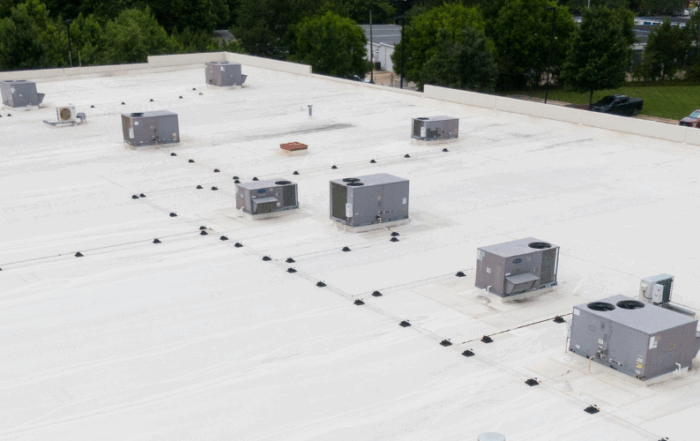
Most people can’t tell the difference between TPO and PVC at first glance, and honestly, that’s fair. They’re both white, reflective, single ply membranes commonly used on flat or low slope roofs. But while they may seem interchangeable, the differences underneath are far more important than they appear.
This guide breaks down the core differences between TPO and PVC, highlights where each one excels, and helps you make a decision that actually fits your building’s needs.
Is TPO Roofing Right for Your Commercial Building?
TPO stands for Thermoplastic Polyolefin, a single ply roofing membrane made from a blend of rubber and plastic. It’s typically white, highly reflective, and designed to reduce heat buildup on flat or low slope commercial roofs. TPO has become one of the most popular commercial roofing materials in the country, and for good reason. It’s cost effective, energy efficient, and widely available. But it’s not the right choice for every building, and understanding where it works best is key.
TPO is a cost effective solution for low risk commercial roofs
TPO is typically less expensive to install than PVC and works well for buildings with minimal rooftop activity or exposure. It’s a strong fit for retail spaces, warehouses, and storage facilities. Our approach to TPO roofing focuses on proper system matching to help avoid common issues like premature wear or membrane shrinkage.
Quick installation with reliable energy savings
Thanks to its lightweight design and flexibility, TPO installs quickly and efficiently. Its reflective surface helps reduce heat gain, making it a solid option for cutting cooling costs.
The downside of low cost: inconsistent product quality
One of the biggest concerns with TPO is how much the quality can vary between manufacturers. Since it’s a newer material compared to PVC, there’s less long-term data and less consistency across brands. Some TPO products are known to shrink, split, or become brittle over time—especially when exposed to high heat or certain chemicals.
This doesn’t mean TPO is unreliable, but it does mean you need to be selective. Choosing a trusted contractor who uses high-performing materials and installs them correctly makes all the difference when it comes to long-term results.
Is PVC Roofing the Right Choice for Your Commercial Roof?
PVC stands for Polyvinyl Chloride, a type of plastic-based roofing membrane known for its strength, flexibility, and chemical resistance. Like TPO, it’s commonly white and used on commercial flat roofs to reflect heat and protect against the elements. While TPO gets attention for its affordability, PVC is the system of choice when durability and resistance are non negotiable. It’s especially effective in environments where exposure is frequent and intense.
PVC resists harsh conditions like grease, chemicals, and exhaust
PVC roofing holds up exceptionally well in areas with acidic runoff, commercial exhaust, or animal fats. Its resistance to chemical breakdown makes it ideal for restaurants, factories, and other high-demand commercial buildings.
Durable performance with long term flexibility
PVC roofs are engineered to handle building movement and heavy foot traffic without tearing or separating at the seams. This added resilience is especially useful on buildings with large HVAC systems or frequent roof access.
Higher upfront cost but better lifetime value
Although PVC typically costs more to install, it often ends up being more economical over time. The durability and resistance it offers translates to fewer repairs, longer lifespan, and reduced risk of failure. For many property owners, those long-term savings far outweigh the higher upfront cost.
For buildings facing harsh rooftop conditions or requiring maximum reliability, PVC continues to be one of the most trusted solutions in commercial roofing.
How to Choose Between TPO and PVC for Your Building
When deciding between these two systems, it’s not about which one is better—it’s about which one is right for your building’s specific demands.
Evaluate your roof’s use, exposure, and access points
Start with the basics. If your roof is exposed to grease, chemicals, or heavy foot traffic, PVC will hold up better. For low use roofs with minimal exposure, TPO might make more sense.
Weigh long term value against short term cost
TPO usually wins the pricing battle at the beginning, but long-term performance is where PVC often pulls ahead. Choosing a system that will last 20 to 30 years with minimal maintenance is usually the smarter move when you factor in the full lifecycle cost.
Choose a contractor who installs both systems
Some contractors push one system simply because it’s what they’re comfortable with. Not to toot our own horn, but Bartlett Roofing is a well qualified roofer that takes the time to assess your property and recommend the solution that actually fits. Our single ply roofing expertise includes both TPO and PVC, so you get the right system for your building and not just the most common option.
Matching your roof system to your building’s specific use case is the most important decision you’ll make in the process. Choose based on facts, not trends.
Making the Right Call for Your Commercial Roofing System
TPO and PVC are both trusted systems, but they are not interchangeable. TPO is a cost effective option for buildings with minimal exposure or light use. PVC is a stronger fit for properties facing grease, foot traffic, or chemical stress.
The mistake many property owners make is treating these two systems as equals without considering what their building actually demands. When that happens, even a good roof can underperform.
Whether you’re replacing an old system or planning a new build, the best place to start is with a team that understands both options. Our commercial roofing experts will help you evaluate your roof’s needs, walk you through the pros and cons of each system, and build a solution that works long term.